Structural Drying in Anoka, MN
The water is gone. The carpet is at the curb, the pad went with it, and the basement floor looks like a basement floor again. But the block wall behind the furnace still reads wet three inches up, the sill plate above it is damp to the touch, and the whole level smells like a lake cabin in May. This site puts you through by phone to an independent local provider who dries out houses in Anoka and across Anoka County after the water is out.
Drying to a number, not to a feeling
Drying starts with a target. The crew meters a wall upstairs that never got wet and writes that number down as the goal for every material downstairs. Then they meter the block, the studs, the drywall, the subfloor, and the concrete in the wet area and mark where each one stands. The gap between the two numbers is the job, and the daily readings show whether it is closing.
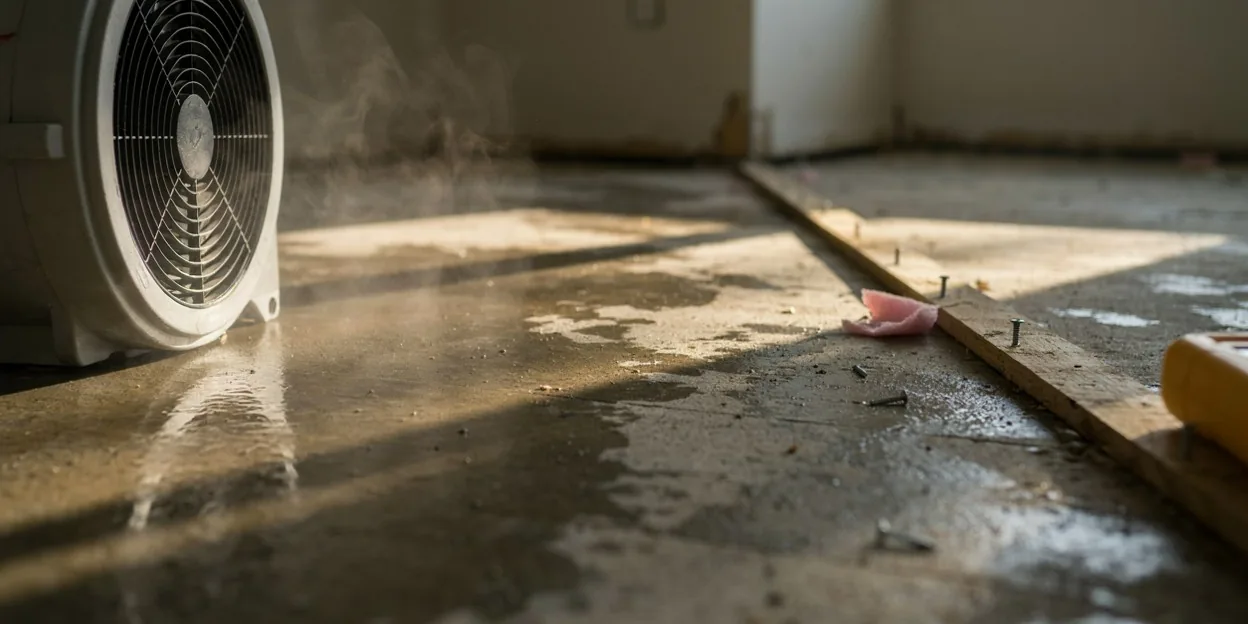
Air movers go along the base of the wet walls at an angle, so air sweeps across the surface and pulls moisture out of the material into the room. A dehumidifier sized for the space pulls that moisture back out of the air and drains it, so it does not settle into the ceiling joists or migrate upstairs. In a block basement the crew may also set equipment to push air through the open wall cavities where the drywall came off.
The questions to ask when the equipment arrives
Ask which rooms the equipment needs and which you can still use. Ask where the dehumidifier drains. Ask what the target reading is and what today's readings are, and ask for the log at the end. Ask whether the furnace and water heater are in the airflow, because the crew keeps them clear. And ask what happens if a reading stalls, because a stalled reading usually means something is still wet behind a surface nobody has opened yet.
Why a Minnesota basement dries slower than a Texas one
A full basement in Anoka is eight feet of poured concrete and block surrounded by cold, damp ground. In April the ground outside the wall is still near 40 degrees and often saturated with snowmelt, so the wall is being dried from inside while it is being wetted from outside. In January a basement with the furnace running is dry in the air but cold at the floor, and cold materials give up water slowly. The equipment stays longer here than the same job would need in a warm, dry climate, and the readings, not the calendar, say when it comes out.
Drying follows the removal step. If the water came from the pit or the floor, the job began as a basement flooding cleanup or a sump pump failure cleanup. If it began with a split line in a cold wall, it started as a frozen pipe cleanup. Drying is the second half of each of those jobs.
What the log does for you later
Every day the crew writes down the readings for each marked spot, the equipment running, and the temperature and humidity in the room. When the readings reach the target, the crew pulls the equipment and gives you the log. That log is what your adjuster asks for when the claim is reviewed, and it is what a rebuild contractor wants to see before hanging new drywall over a wall that was wet a month ago. Materials closed up while still damp are how a spring basement flood becomes a summer mold call.
A homeowner policy often pays for drying after a sudden loss such as a burst pipe, and often does not after groundwater seepage or a drain backup. This site cannot say what yours does. The log and the photos give your adjuster the facts either way.
Calling about a basement that will not dry
Say what got wet, how long ago the water was removed, whether any walls have been opened, and whether the space is finished or bare block. Call (763) 363-6050.